


Neighbour complaints are one of the biggest risks for any tourist rental owner or property manager. They don’t just affect coexistence — they can lead to fines, inspections, licence suspensions or even the closure of the activity.
The good news is that most neighbour conflicts can be prevented if the right operational approach is in place and supported by the right tools.
In this article, we review the most important strategies to reduce neighbour complaints in tourist properties, and how Roomonitor plays a central role in this approach.
1. Noise: the main source of conflict
In most cities, noise is the primary trigger for neighbour complaints.
Parties, large gatherings, loud music or simply intensive use of a property outside permitted hours are often enough for a neighbour to contact the police or local authorities.
The key is not to react, but to anticipate
Many property owners act only after the problem has already occurred. The neighbour has complained. The police have visited. And the case is already open.
The real difference lies in detecting the issue before it escalates.
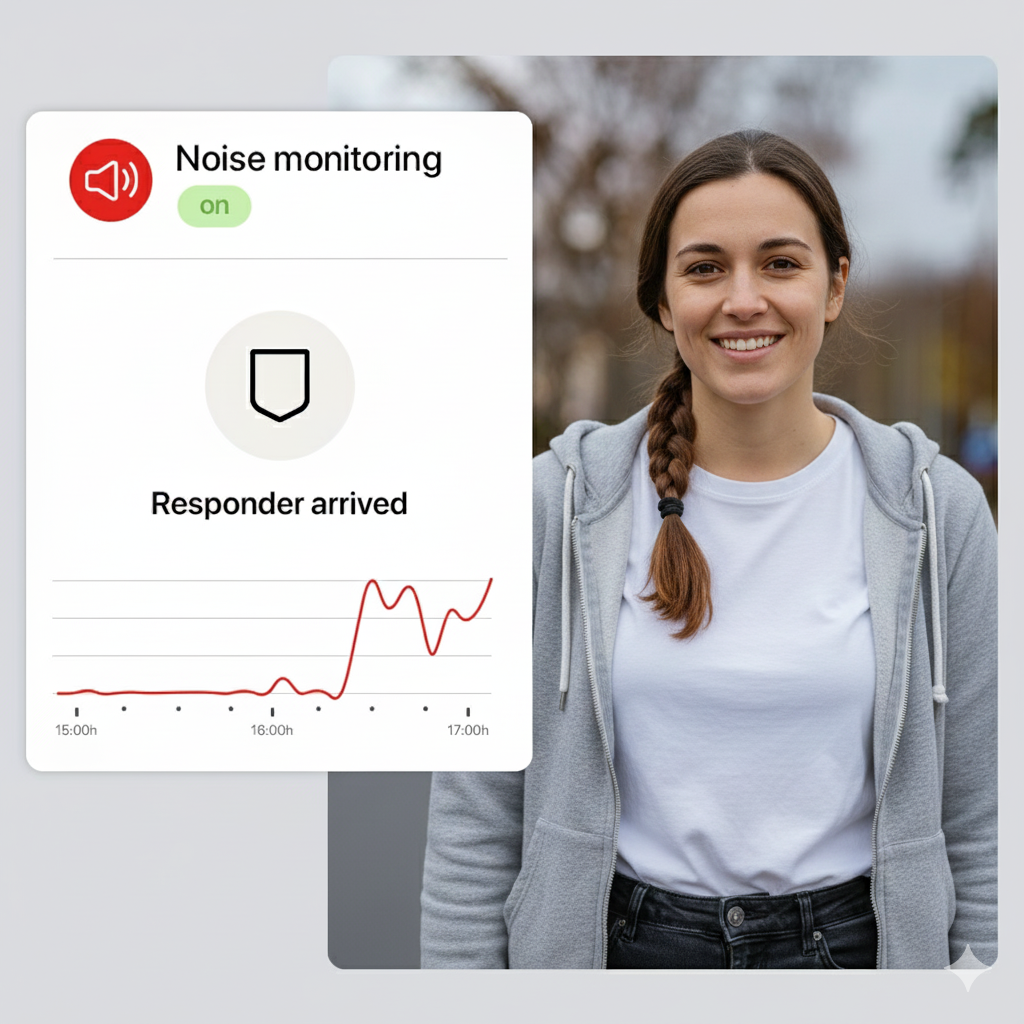
This is where the Roomonitor noise sensor becomes a fundamental piece of the strategy.
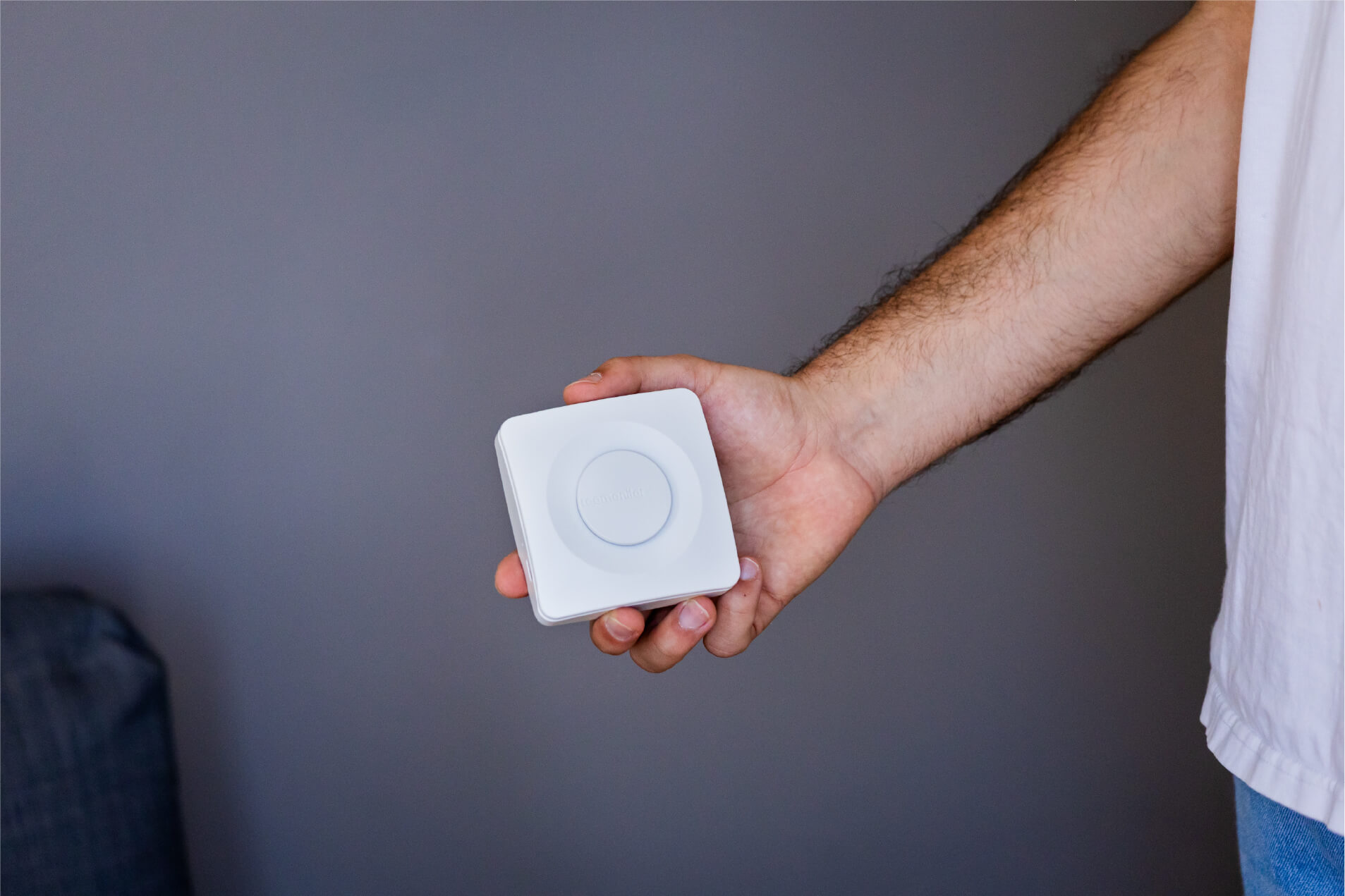
The Roomonitor device
The Roomonitor device measures noise levels in real time, without recording conversations or compromising guest privacy.
When predefined thresholds are exceeded, the system:
- Detects risk situations based on multiple patterns
- Triggers automatic alerts
- Enables immediate action
This makes it possible to intervene before noise turns into a neighbour complaint, while also demonstrating a proactive attitude in the event of inspections or claims.
2. Clear rules from the very beginning
Many conflicts arise because guests don’t clearly understand what is expected of them.
Ambiguous house rules, lack of property information or generic, late communications create room for non-compliance.
What works best
- Clear, visible house rules
- Reminders before and during the stay
- Messages adapted to the moment (check-in, nighttime, check-out)
With Roomonitor, these rules don’t remain just a document:
- They are integrated into operational protocols
- They are automatically activated in risk situations
- They are communicated at the right moment
3. Fast and coordinated response
A neighbour complaint rarely results from a single isolated incident, but rather from a perceived lack of response or control.
When noise persists over time and no action is taken, neighbours decide to escalate the issue.
The importance of response time
Reducing complaints is not just about detecting issues, but about:
- Acting quickly
- Acting consistently
- Following clear criteria
The Roomonitor ecosystem combines:
- Noise monitoring devices
- A Control Center that handles guest calls and call forwarding
- Operational protocols
This enables immediate, documented and consistent intervention, even when the property manager is not available.
4. Protocols, not improvisation
Improvising in response to incidents leads to mistakes, inconsistent responses and frustration for both neighbours and guests.
Professional operators work with clear protocols:
- What to do after a first warning
- When to contact the guest
- When to escalate the incident
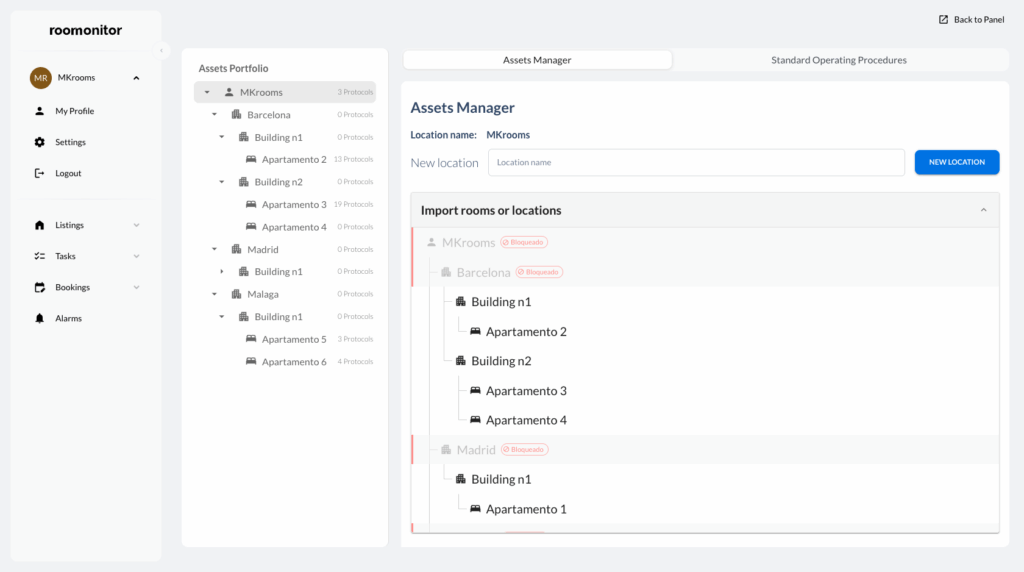
With Roomonitor’s Manager platform, these protocols are structured by:
- Main account
- City or building
- Property or room
This ensures that every team acts in the same way, regardless of the asset or moment.
5. Proving due diligence to authorities and communities
More and more local authorities and homeowner associations require proof of control and prevention — see the example in Cantabria.
It’s no longer enough to say “we monitor noise”. You need to be able to prove it.
Roomonitor allows you to:
- Demonstrate continuous, real-time monitoring
- Provide records of actions taken
- Prove the existence of a preventive strategy
This not only reduces the risk of fines, but protects business continuity. And if needed, Roomonitor agents can monitor devices and act on your behalf.
Conclusion: prevention protects your licence
Reducing neighbour complaints doesn’t depend on a single action, but on a comprehensive strategy built on prevention, technology, protocols and fast response.
The Roomonitor device is the starting point of the entire system — not as a reactive tool, but as a key element of preventive and operational control.
Because in tourist rentals, the best incident is the one that never happens.